Fall 2024 | Professor: Talia Andrei
This class looked at how Buddhist beliefs have been expressed through art and architecture across Asia. We started with early traditions in India, including the first images of the Buddha and then followed the spread of Buddhism and its art and architecture through Central Asia, China, Korea, and Japan.
We looked at how Buddhist images and objects were used for worship, meditation, and even political power and were expected to think critically about their meaning and purpose. We visited the Davison Art Center’s collection, where we got to examine ancient stone carvings and analyze them.
The course included readings, discussions, exams, and a final research paper where we focused on one individual piece of work. For mine, I wrote about a 10th Century Japanese sculpture of Kūya, a wandering monk known for chanting the name of Amida Buddha. I looked at how the piece visually represents sound and movement and how it connects to devotional practiced in Pure Land Buddhism.
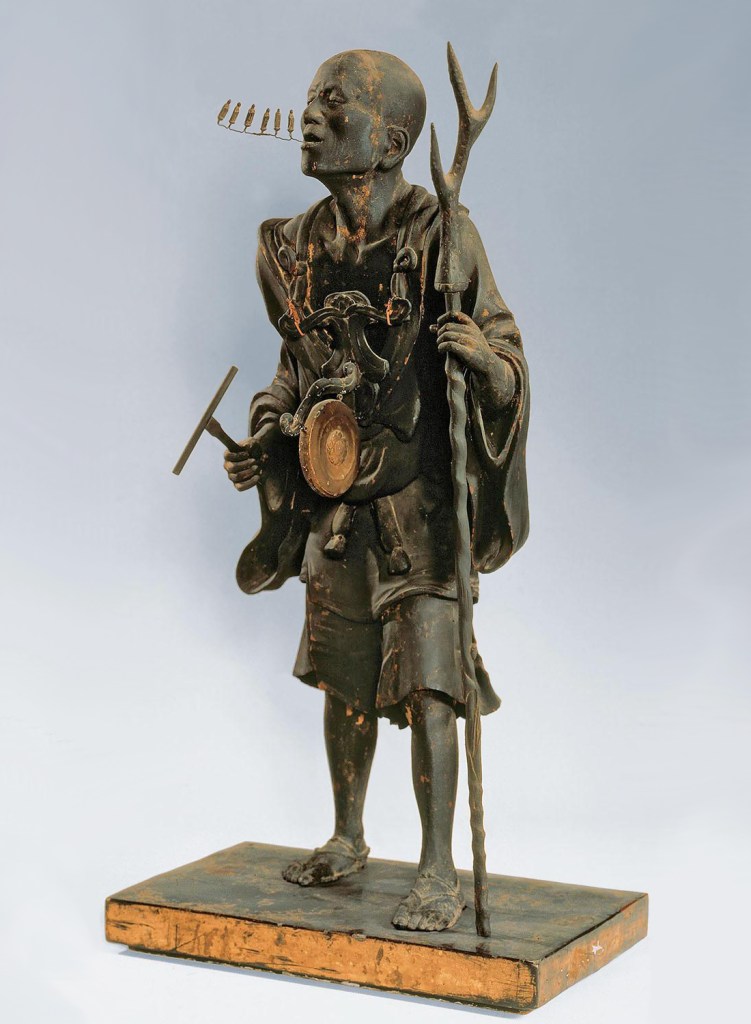
The Priest Kūya, by Kōshō. Early 13th Century. Wood with paint and inlaid eyes: height 46 ¼ in. (111.6 cm). Rokuharamitsuji, Kyoto.
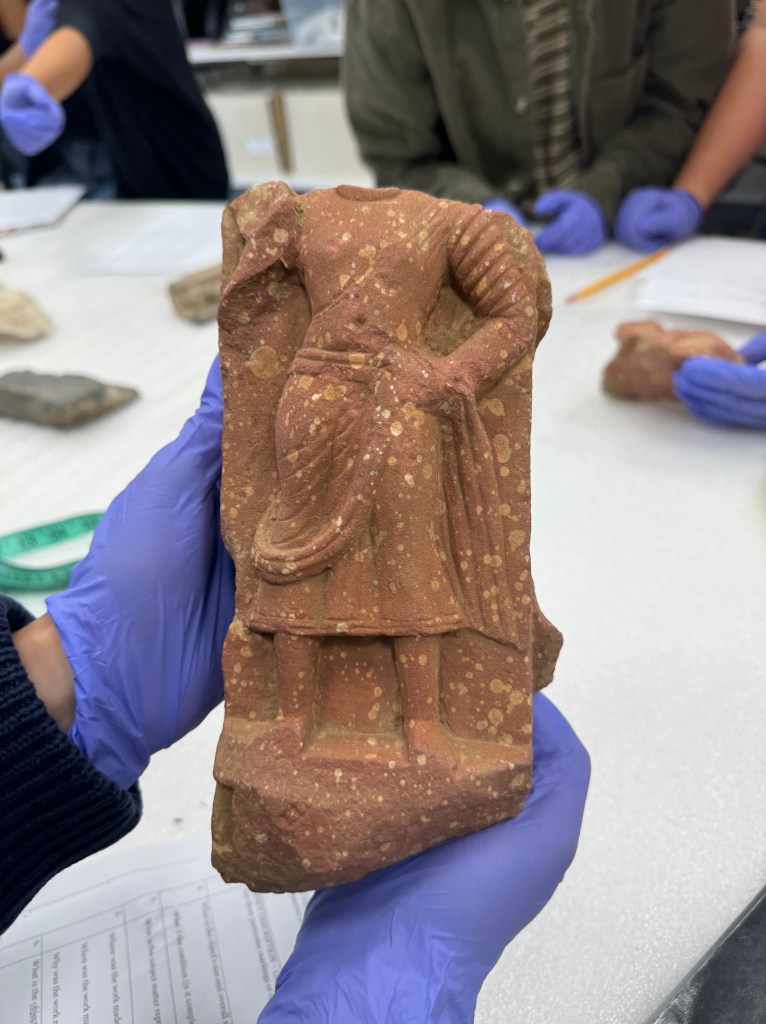
Fragment of a Standing Figure, likely a Bodhisattva
Red sandstone, c. 2nd–4th century CE, Mathura region, India
Davison Art Center Collection, Wesleyan University
 elsagordon.org